
Weeds in beds and borders not only look unsightly, but they also compete with flowers and plants for vital sunlight, nutrients, and water. If left to grow unchecked, weeds can quickly spread and take over planting areas, weakening your garden plants and reducing their ability to thrive. Learning how to remove and control weeds effectively will help keep your beds and borders healthy, tidy, and full of strong, vibrant plants.
Many weeds spread very quickly, either by dropping large numbers of seeds or through underground root systems that grow and spread beneath the soil. This means that even a small weed problem can become much bigger if it is not dealt with early. Regular maintenance and early removal are the best ways to keep weeds under control.
There are several ways to kill weeds in beds and borders:
By Hand
The most traditional and environmentally friendly way to remove weeds is to pull them by hand. This method allows you to remove the entire plant, including the root system, which helps prevent the weed from regrowing. It is best done when the soil is moist, such as after rainfall or watering, as this makes it easier to pull the weeds out completely.
Using a hand fork or weeding tool can also help loosen the soil and lift stubborn weeds. This method may take a little time and effort, but it is very effective for small to medium-sized weed infestations and allows you to avoid using chemicals around delicate plants.
Mulching
Covering the soil with mulch is one of the most effective ways to prevent weeds from establishing in the first place. A layer of mulch blocks sunlight from reaching weed seeds, making it harder for them to germinate and grow. Mulch also helps the soil retain moisture, regulate temperature, and improve soil health over time.
Apply a layer of mulch around your plants in early spring before weeds have a chance to establish. Organic materials such as bark chips, compost, straw, or leaf mould work particularly well and will gradually break down to improve the soil. Keeping mulch topped up throughout the year will continue to suppress weeds and support plant growth. Learn more about how to use mulch
Weedkiller
If hand pulling and mulching are not enough to control the weed population in your beds and borders, you may want to consider using a weedkiller. Weedkillers can be particularly useful for tackling larger infestations or persistent weeds with deep root systems.
However, some weedkillers can harm nearby plants and wildlife if not used carefully. Always follow the product instructions and avoid spraying on windy days to prevent drift onto plants you want to keep.
What product should I use?
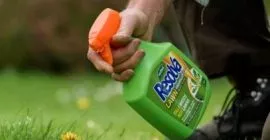
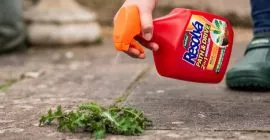
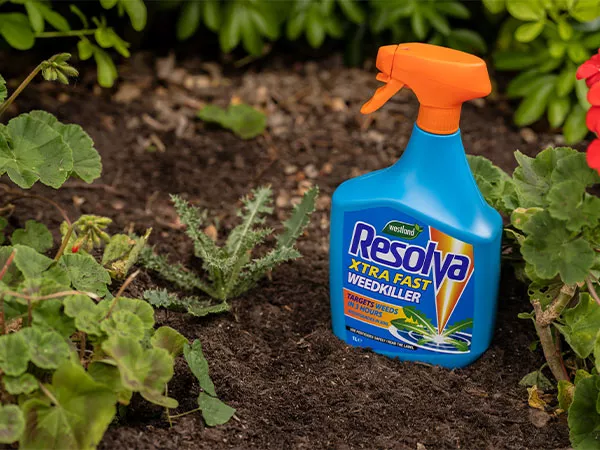
Get rid of weeds easily by spraying with Resolva Xtra Fast Weedkiller. This no-glyphosate formula targets weeds and their roots in just 3 hours, helping to stop them from regrowing. It also biodegrades in the soil and provides fast, visible results so you can quickly restore the appearance of your beds and borders. Keep the weeds in your garden at bay with this fast and effective weedkiller. The formula is available in 1L and 3L ready-to-use bottles, as well as a concentrate for larger areas.
If you are dealing with larger weeds or more established growth, you may prefer to use our glyphosate Resolva 24H Weedkiller. This powerful systemic weedkiller works by travelling down into the weed’s root system to kill the entire plant. Visible results can be seen within 24 hours, helping you quickly tackle weeds in beds, borders, paths, and patios.

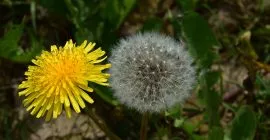
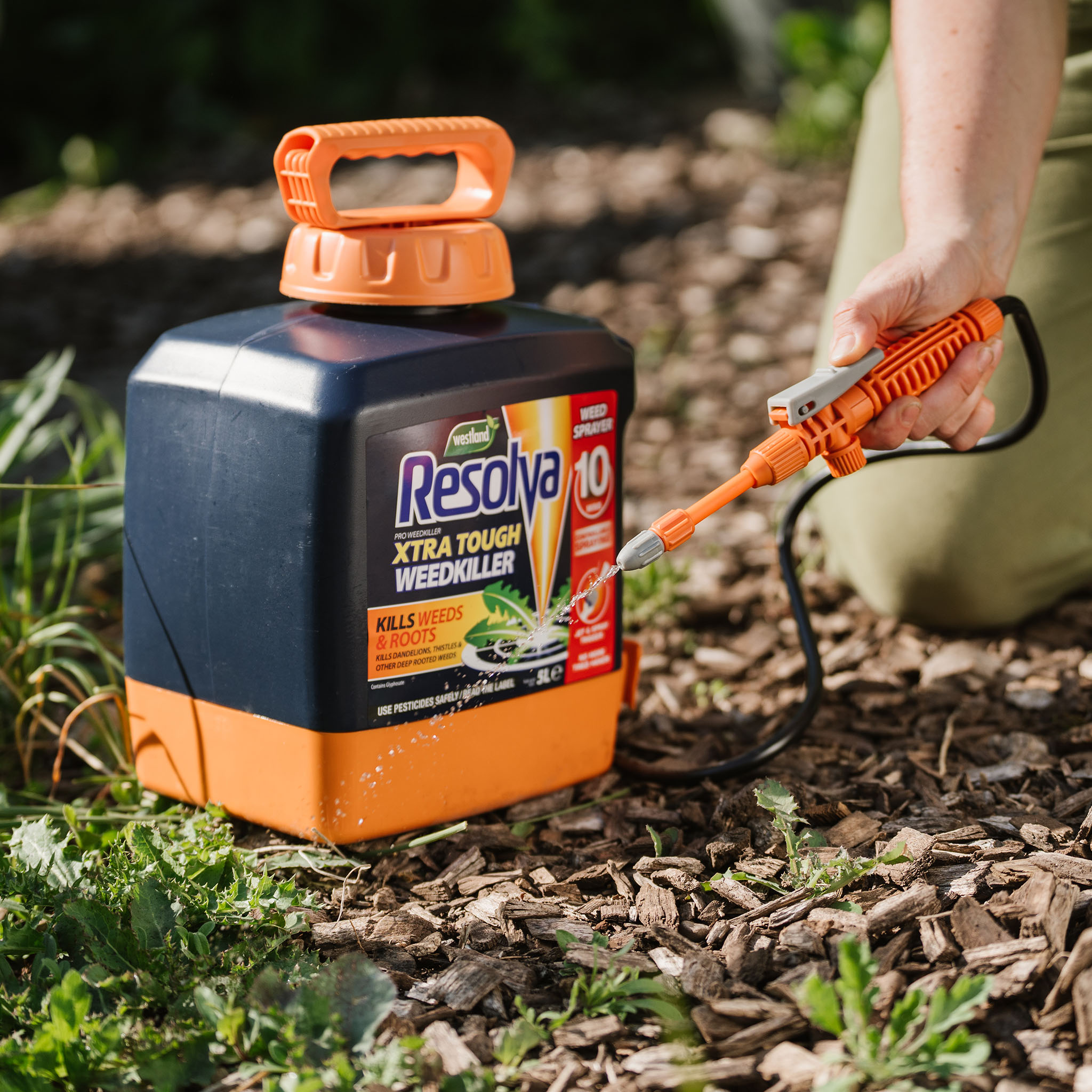
For particularly tough or stubborn weeds, such as those with deep or woody roots, Resolva Xtra Tough Weedkiller is another effective option. This formulation is designed to tackle more persistent weeds, such as dandelions, thistles, bindweed, and more, helping to eliminate them down to the root to prevent regrowth. It is ideal for areas where weeds repeatedly return or where weeds have become well established.
After the weed has died, carefully dig it out by hand using a weeding tool. Be sure to remove the entire root structure, as leaving pieces behind may allow the weed to regrow.
Weed Prevention
Regularly removing weeds before they have a chance to flower and set seed can significantly reduce future infestations. Even a few weeds left to seed can produce hundreds of new plants the following season.
Maintaining healthy soil and choosing plants that are well-suited to your growing conditions will also help reduce weed growth. Strong, well-established plants naturally compete with weeds, making it harder for them to take hold.
Remember, prevention is key when controlling weeds in beds and borders. Regularly check your planting areas and remove any weeds as soon as they appear before they become established. A little routine maintenance will help keep your garden looking neat, healthy, and full of thriving plants.