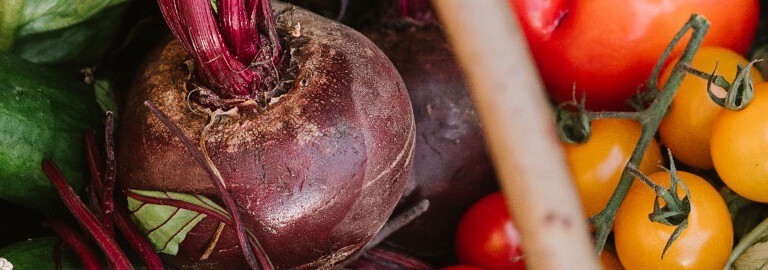
Growing your own vegetables at home is easy and rewarding with our innovative Multi-Planter Growbag. Designed for patios, balconies, gardens, and allotments, it allows you to grow a wide variety of vegetables, salad crops, and herbs in one flexible, space-saving solution.
The clever colour-coded arrows and depth indicators make it easy to plant each crop at the correct depth, giving your plants the best possible start. Follow our simple guide below to discover how to grow vegetables successfully in this Multi-Planter, from planting through to harvest.
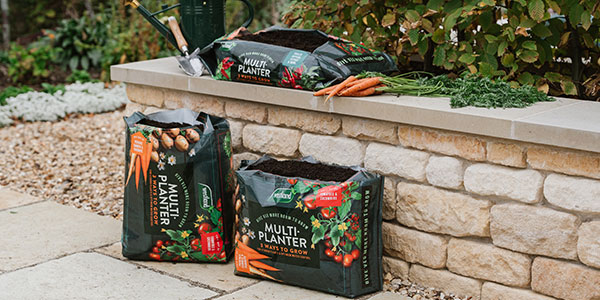
Before You Begin to Plant in Your Multi-Planter
- Shake and squeeze the planter to help loosen the compost.
- Position the planter in the correct orientation depending on what you are growing.
- Make plenty of drainage holes on the underside of that orientation.
- Then cut along the line markings to make a planting hole.
How to Grow Your Own Tomatoes, Cucumbers, and Peas & Beans
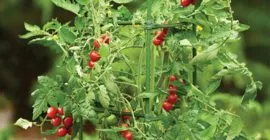
Tomatoes, cucumbers, peas, and beans are among the most popular grow-your-own vegetables and perform exceptionally well in growbags. The Multi-Planter’s 30cm depth gives the roots room to develop and prevents plants from becoming root-bound.
When to Plant Out and Harvest
| Crop | Planting Time | Harvest Period |
|---|---|---|
| Tomatoes | Late May to early June, once all risk of frost has passed | July – September |
| Cucumbers | Late May to early June, once all risk of frost has passed | July – September |
| Peas | March to April | June – August |
| Broad Beans | February to April | Late May – July |
| Runner Beans | Late May to June | July – October |
| French Beans | Late May to June | July – September |
How to Plant
- Position your growbag in a bright, sunny spot with shelter from strong winds.
- Turn the planter so the red arrow marked ‘Tomatoes, Cucumbers, Peas & Beans’ is facing upwards (approx. 30cm depth).
- Shake and squeeze the planter to help loosen the compost.
- Punch drainage holes in the base and cut along the marked planting line.
- With gloved hands, remove enough compost to make a planting hole sufficient for the root ball of the plant.
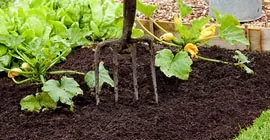
- Rework the remaining compost in the planter between gloved hands or using a hand fork to break up and regain its intended texture.
- Add support before planting tomatoes, peas, and beans, such as bamboo canes, tomato cages, or netting.
- Plant your plants, backfill with compost, firm gently, and water thoroughly.
Care & Feeding
- Keep compost consistently moist – make sure to avoid waterlogging. Water daily in hot weather.
- Feed every 1-2 weeks with Westland Big Tom Tomato Feed once the first flowers appear (tomatoes) or first true leaves (cucumbers) with Westland Organic Vegetable Liquid Feed.
More information on how to care for tomatoes.
How to Grow Your Own Chillies, Peppers, and Lettuce
These versatile crops are ideal for container and growbag gardening, perfect for patios and balconies.
When to Plant Out and Harvest
| Crop | Planting Time | Harvest Period |
|---|---|---|
| Chillies & Peppers | Late May to June, once all risk of frost has passed | July – October |
| Lettuce | March to August, depending on variety | A few weeks after sowing until end of summer |
How to Plant
- Place the growbag in a light, sheltered position.
- Orientate the planter using the blue arrow at a depth of 18cm.
- Shake and squeeze the planter to help loosen the compost.
- Punch drainage holes in the base and cut along the marked cutting line.
- With gloved hands, remove enough compost to make a planting hole sufficient for the root ball of the plant.
- Rework the remaining compost in the planter between gloved hands or using a hand fork to break up and regain its intended texture.
- Plant chillies and peppers so the soil level matches the hole; for lettuce, plant carefully to allow airflow and healthy growth.
- Backfill with compost, firm gently, and water well.
Care & Feeding
- Water little and often — salad crops are particularly thirsty.
- Feed fortnightly with Westland Organic Vegetable Liquid Feed.
- Harvest lettuce regularly to encourage fresh growth.
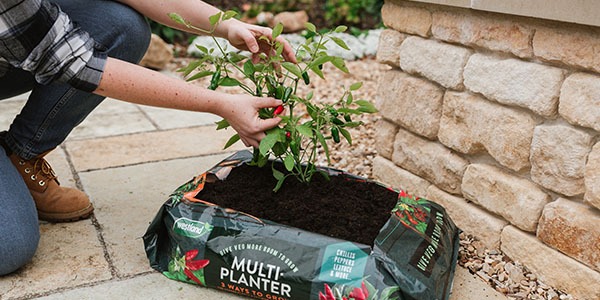
How to Grow Your Own Herbs
Growing herbs adds fresh flavour to meals and salads. Some herbs, like rosemary, are evergreen and can be harvested all year round when healthy and well-grown.
When to Plant and Harvest
| Crop | Planting Time | Harvest Period |
|---|---|---|
| Herbs (rosemary, parsley, basil, thyme, etc.) | Spring through summer for most varieties | Evergreen herbs like rosemary: all year; tender herbs: summer to early autumn |
How to Plant
- Position the planter in a sheltered sunny spot.
- Orientate using the blue arrow at 18cm depth.
- Shake and squeeze the planter to help loosen the compost.
- Lay flat, then punch drainage holes in the base and cut along the planting line.
- Use a hand fork to rework the compost, remove some to make a planting hole to the depth of the herb pot.
- Rework the remaining compost in the planter between gloved hands or using a hand fork to break up and regain its intended texture.
- Place the plant, backfill with compost, firm gently, and water well.
Care & Feeding
- Feed with Westland Organic Seaweed Liquid Plant Food throughout the growing season.
- Harvest regularly in summer to encourage bushy, healthy growth.
Harvest
- Pick herbs as needed, cutting just above a leaf node to encourage growth.
- Evergreen herbs: all year; tender herbs: summer to early autumn.
How to Grow Your Own Potatoes
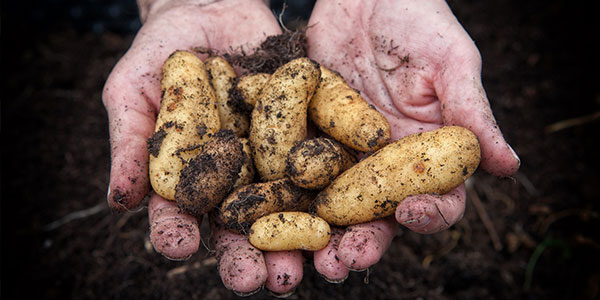
Potatoes can be grown easily in the Multi-Planter Growbag, ideal for patios, balconies, and small gardens.
When to Plant and Harvest
| Planting Time | Harvest Period |
|---|---|
| March to May, once all risk of frost has passed | Late June through October |
How to Plant
- Place in a light, sheltered position.
- Orientate using the orange arrow ‘Potatoes, Carrots and Parsnips’ at 37cm depth.
- Shake and squeeze the planter to help loosen the compost.
- Punch drainage holes and cut along the marked line.
- Remove half of the compost, rework the remaining compost in the planter between gloved hands or using a hand fork to break up and regain its intended texture.
- Place chitted seed potatoes evenly, cover with 15-20cm of compost.
- As plants grow, add more compost (earthing up) to encourage tubers.
- Position in a sunny spot and water well.
Care & Feeding
- Keep compost consistently moist.
- Avoid overwatering in cooler weather.
Harvest
- Harvest 2-3 weeks after flowering for baby potatoes or after the foliage turns yellow and dies back for main crop.
- Enjoy your homegrown potatoes!
How to Grow Your Own Carrots
Carrots are perfect for container and growbag gardening.
When to Sow and Harvest
| Sowing Period | Harvest Period |
|---|---|
| Feb – June | June – November |
How to Plant
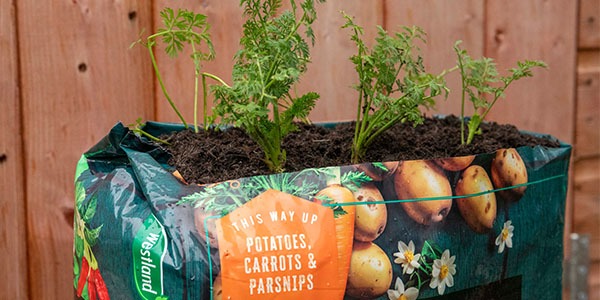
- Orientate using the orange arrow at 37cm depth.
- Shake and squeeze the planter to help loosen the compost.
- Punch drainage holes, cut along the line, remove a small compost layer, and fork over gently.
- Rework the remaining compost in the planter between gloved hands or using a hand fork to break up and regain its intended texture.
- Firm lightly, sow seeds thinly, cover with removed compost.
- Water in gently and keep the compost moist at all times.
Thinning
- Thin seedlings to 5–8cm apart when the first true leaves appear, avoiding crushing leaves.
Care & Feeding
- Water regularly, especially in hot, dry periods.
- Feed with Westland Organic Vegetable Liquid Feed if growth is slow or leaves pale.
Harvest
- Pull carrots as needed, leaving remaining in soil until required.
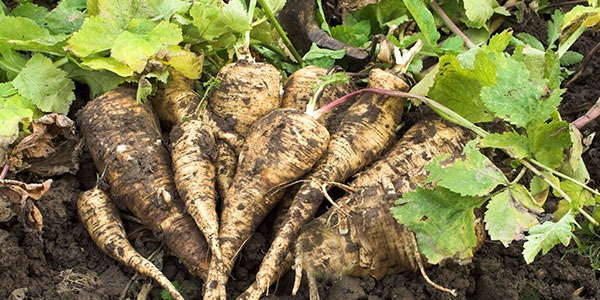
How to Grow Your Own Parsnips
Parsnips are well-suited to container and growbag gardening.
When to Sow and Harvest
| Crop | Sowing Period | Harvest Period |
|---|---|---|
| Parsnips and other root crops | Feb – April | Sept – Feb |
How to Plant
- Shake and squeeze the planter to help loosen the compost.
- Orientate using the orange arrow at 37cm depth, punch drainage holes, and cut along the line.
- Remove a small compost layer, fork over, firm lightly, sow seeds thinly, cover, water gently.
- Keep in a sheltered position and never let compost dry out.
Thinning
- Thin to 5–8cm apart by removing every other seedling when the first true leaves appear.
Care & Feeding
- Water regularly to keep compost moist, especially in hot, dry weather.
Harvest
- Harvest parsnips from Sept – Feb as needed, leaving others in the soil until required.