
If you want to learn how to grow roses and keep them looking their best all year round, this complete guide covers everything – from choosing the right rose and planting it correctly, to pruning, feeding, watering, and caring for both bare-root and container-grown plants. Whether you’re starting from scratch or tending to a mature rose bush, these steps will help you grow strong, healthy roses that bloom beautifully throughout the season.
Choosing the Right Rose
Before you begin learning how to grow roses, it’s important to choose a variety suited to your garden.
Size
Roses can be compact patio plants or large, vigorous shrubs. Choose a size that fits your space or container.
Flower Style
Decide whether you prefer large, old-fashioned blooms or more delicate tea rose flowers. Consider fragrance too; some roses have fruity scents, others lean towards musk or tea-like notes. Also, think about what colours work well with the rest of your planting.

Planting Position
Roses generally need plenty of sunlight, so assess the conditions in your garden. Look at soil type, frost pockets, shade, and exposure. Choose a rose that will thrive in the area you have.
Types of Roses
Understanding rose types helps you choose the best option for your garden and understand how to grow roses successfully.
Bare-root Roses (November–March)
Supplied without soil. Plant as soon as possible on arrival. Great value and excellent for winter planting.
Containerised Roses (November–March)
Bare-root roses are potted up to prevent roots from drying out.
Container-grown Roses (Available all year)
Already growing in soil and easy for beginners. Can be planted at any time.
How to Grow Roses: Step by Step
When to Plant Roses
- Bare-root roses: Plant immediately, ideally in late autumn or from late winter to early spring.
- Containerised roses: Plant any time of year, as soon after purchase as possible.
- Container-grown roses: Plant throughout the year.
Avoid planting in frozen, waterlogged, or drought-dry soil.
Where to Plant Roses
Roses need:
- A sunny spot with at least 4–6 hours of sunlight per day
- Free-draining soil that won’t dry out completely in summer
- Shelter from harsh winds
- Around 60cm of space to avoid competition for nutrients and water
How to Plant Roses
1. Preparing the Hole
Dig a hole around twice the width and depth of the root ball. Loosen the soil at the base and sides to help roots spread.
2. Use the Right Compost
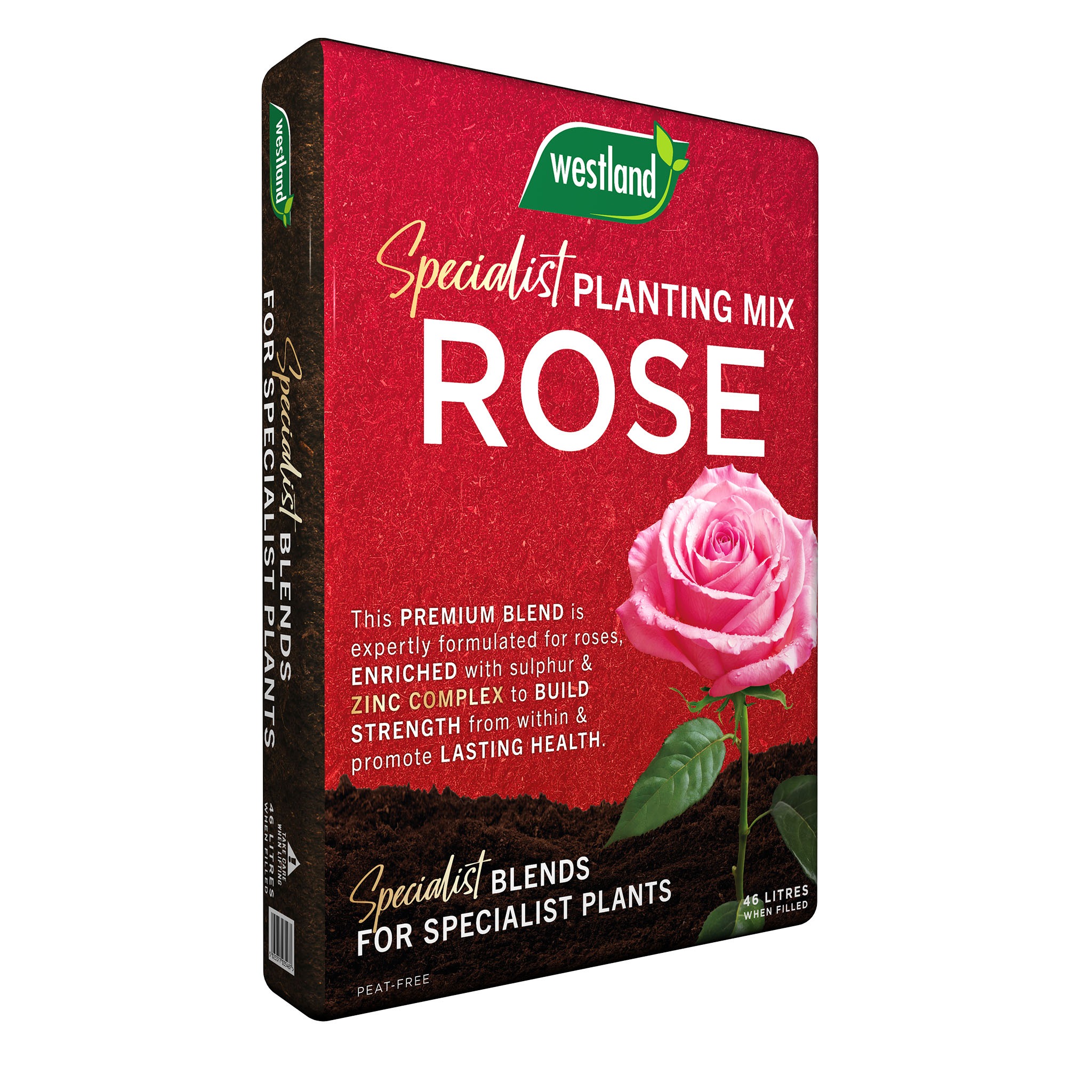
Fill the base with Westland Specialist Rose Planting Mix. This specialist mix helps protect roses from black spot and rust, supports strong root development, and promotes glossy leaves and vibrant blooms. You should also add a handful of Rose Granules, which improves the soil structure so roses thrive.
3. Planting
- Remove the rose from its pot.
- Place it into the hole so the crown sits level with the soil surface.
- Turn the rose so its best side faces the main viewpoint.
- Backfill with compost mixed into the surrounding soil.
- Firm in, but don’t over-compress and water well.
4. Staking
Standard roses should be staked immediately to prevent wind rock. Check ties annually.
Growing Roses from Bare Root
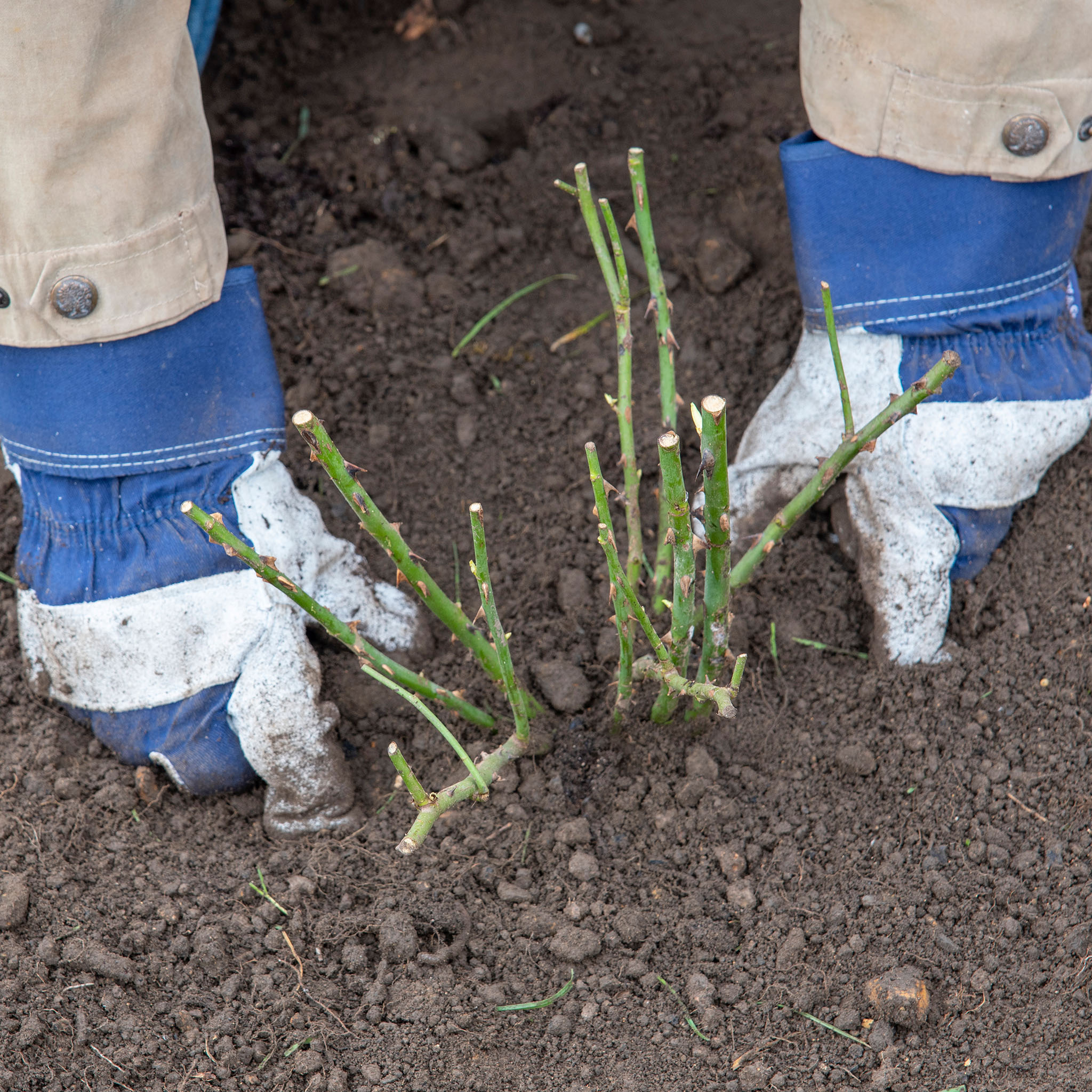
Bare-root roses need a little extra prep when planting. Soak the roots in tepid water for 2 hours (no more than 12) before planting.
Planting
- Dig a hole around 40cm x 40cm.
- Place the rose so the crown is at soil level.
- Dust roots with mycorrhizal fungi to boost root establishment.
- Backfill with soil and rose compost, firm gently, and water well.
- Ensure they are planted in an area that gets at least 6 hours of sunlight.
How to Grow Roses in Pots
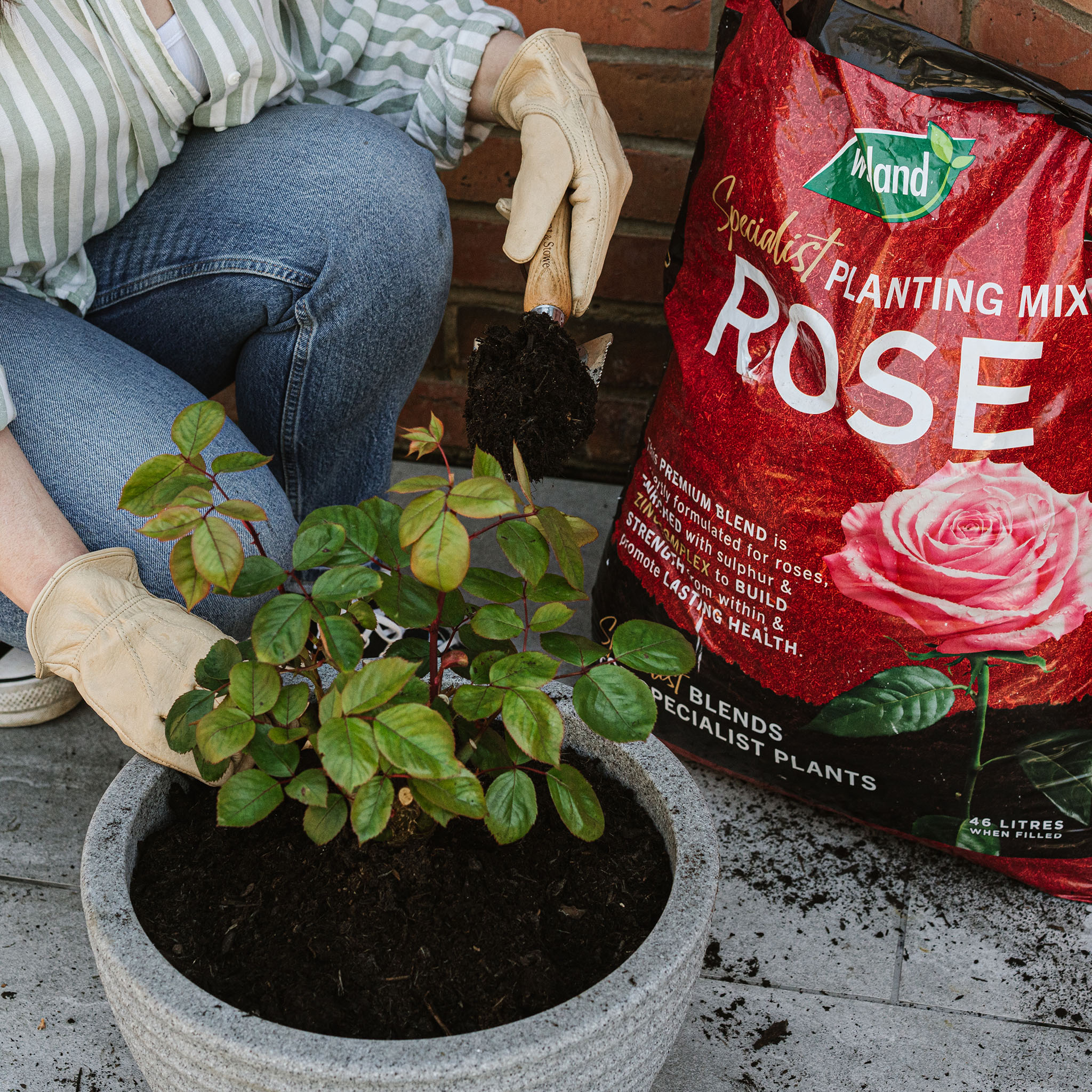
If you’re learning how to grow roses in containers, choose compact varieties and use a specialist compost such as Westland Rose Specialist Planting Mix.
- Thoroughly water the plant, gently tap the pot to remove the plant, and shake off loose compost.
- Half fill the pot with new compost and add in a handful of Specialist Rose Granules
- Place the plant in the pot, fill gaps with more compost, firm in, and water.
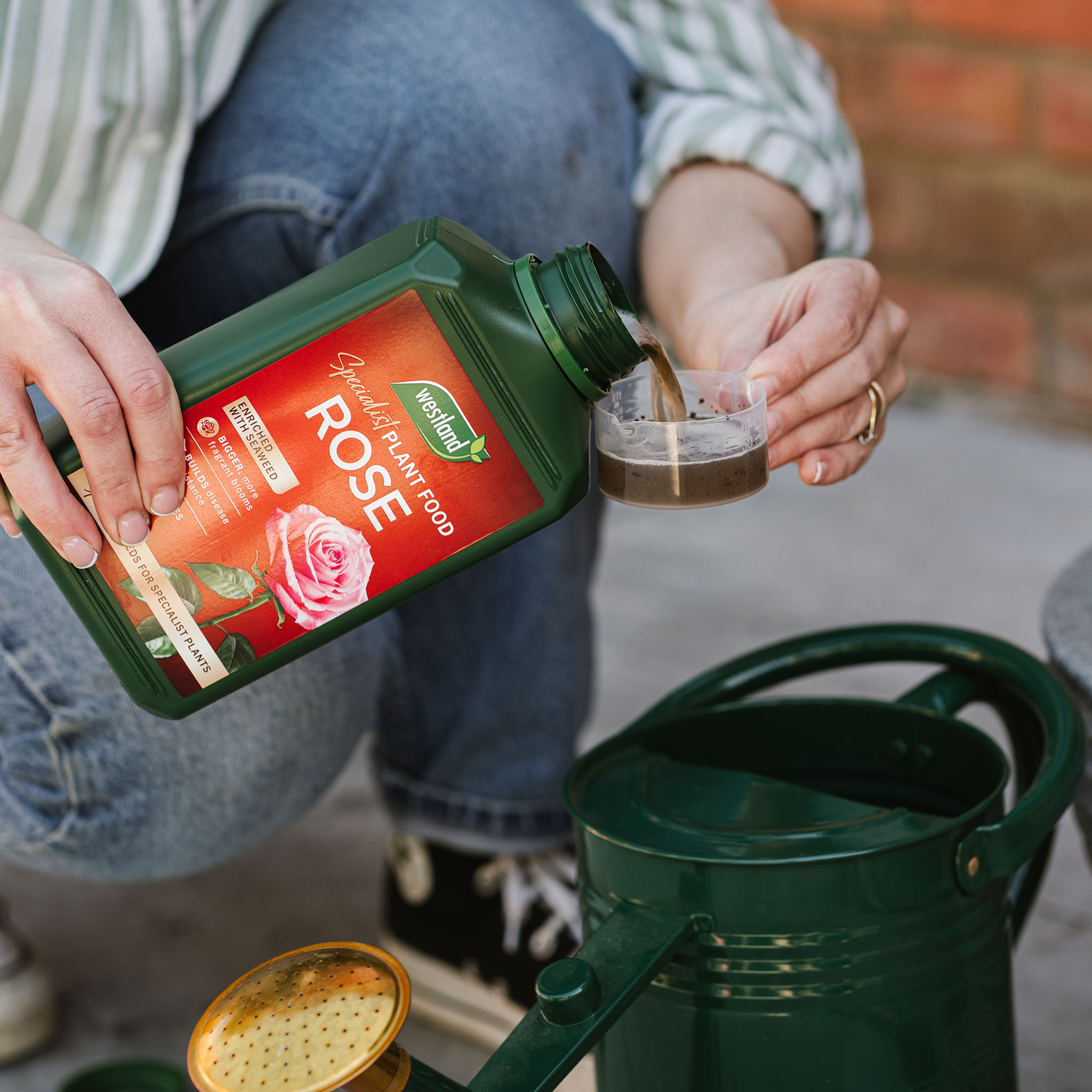
- Water regularly, especially in summer, and add Westland Rose Liquid Plant Food to your watering can to give you bigger, more fragrant blooms and to help build disease resistance.
- In autumn, refresh the top layer of compost and mulch with manure.
How to Prune Roses
Pruning is essential for anyone learning how to grow roses that bloom reliably.
Pruning is essential when learning how to grow roses that flower reliably.
- Most roses: prune in winter.
- Rambling roses: prune in summer.
- Hard pruning encourages strong new growth; light pruning results in fewer new buds.
- Always cut to an outward-facing bud and remove crossing or competing stems.
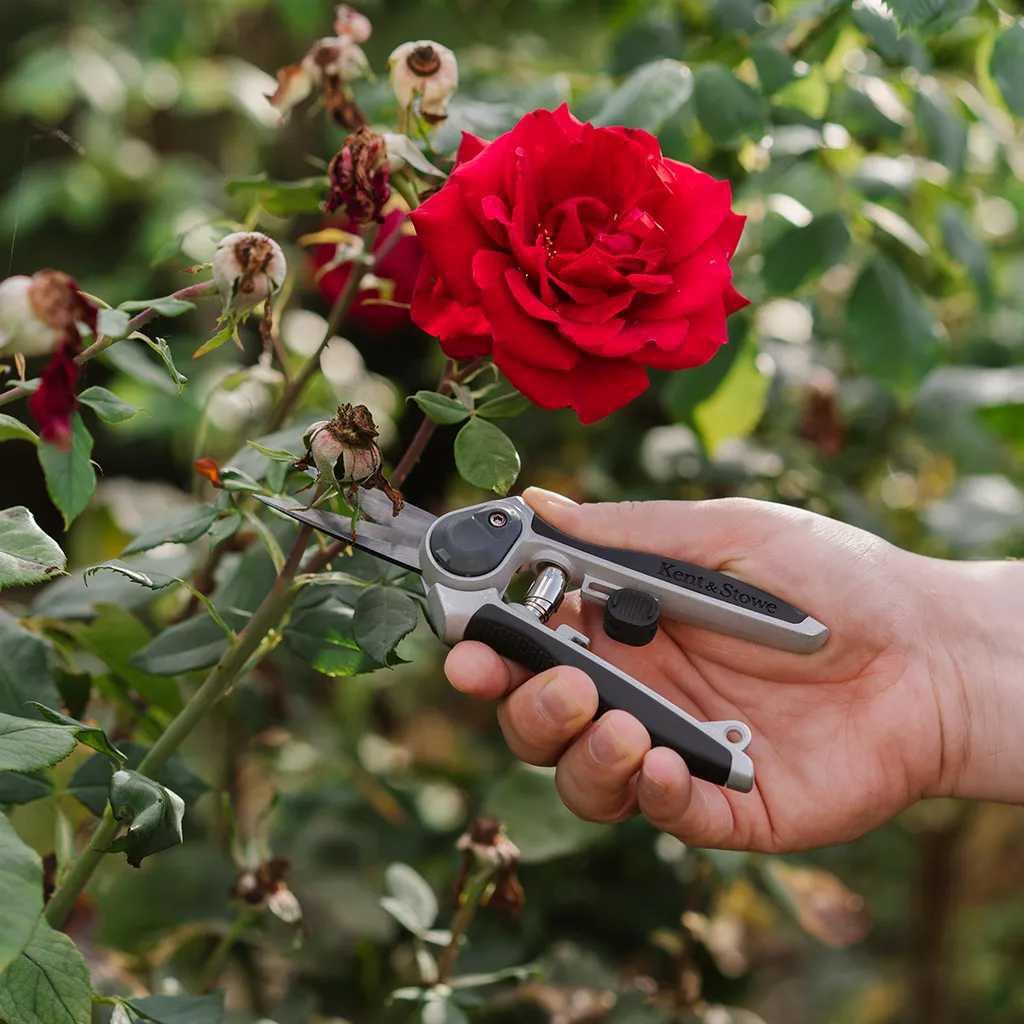
- Use a pair of good bypass secateurs and wear thorn-proof gloves.
Deadheading
Remove spent flowers throughout the summer to encourage more blooms and keep the plant tidy. Cut just above a healthy set of leaves.
Late Season Care
After the first frost, trim long stems to prevent wind damage. Remove crossing branches that may rub and cause wounds. Avoid heavy pruning until late winter to prevent frost-damaged new growth.
Additional Rose Care Tips
Feed Regularly
For strong, continuous growth, feed roses with Westland Rose Liquid Plant Food. Use Westland Rose 2 in 1 Feed & Protect to strengthen plants and shield them from pests and diseases.
Water Deeply
Roses prefer deep, infrequent watering. Allow the soil surface to dry slightly between waterings.
Mulch Well
Apply a layer of mulch to lock in moisture and suppress weeds.
Prevent Pests and Disease
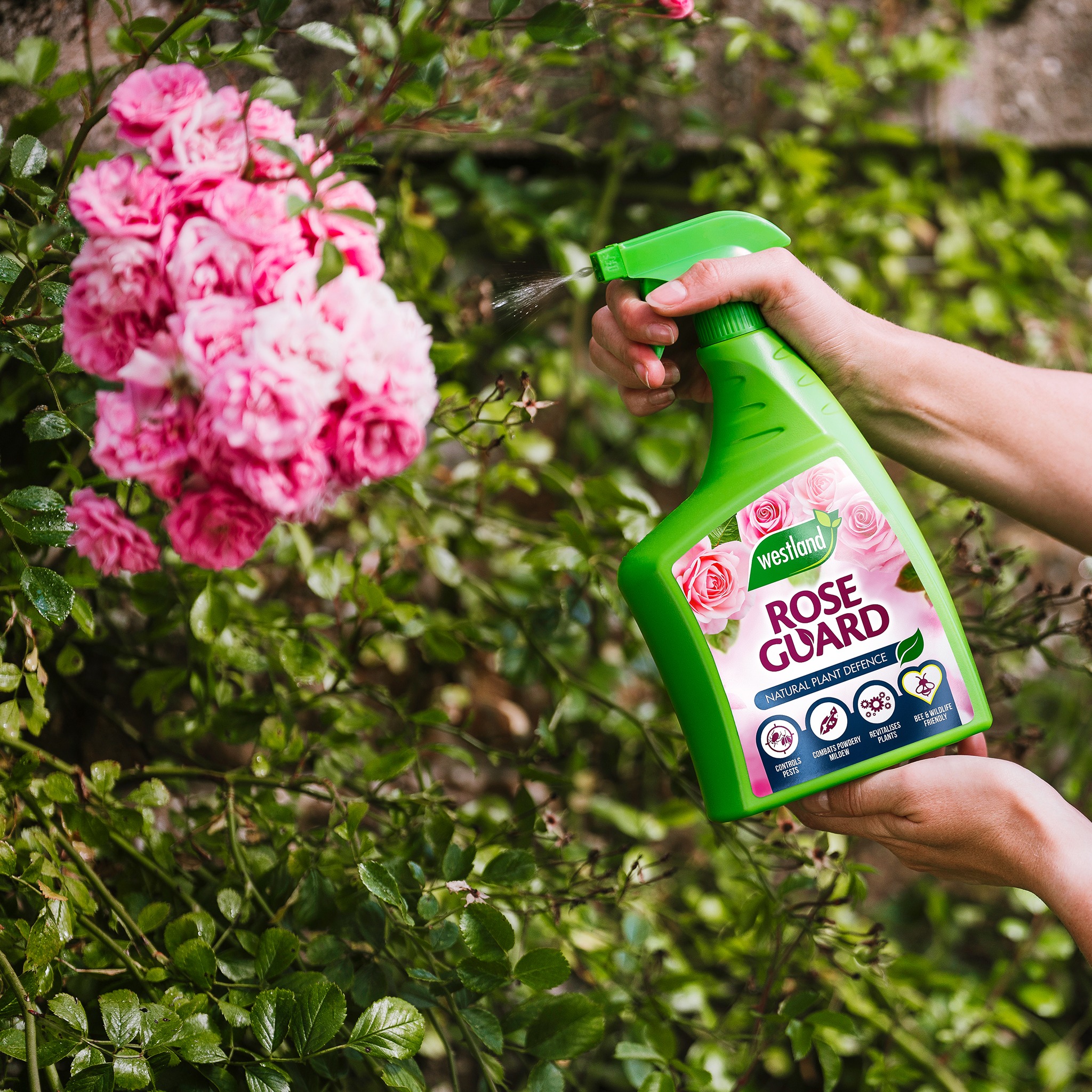
Use a preventative spray such as Westland Rose Guard at the first sign of pests. It helps control aphids, whitefly, spider mites, and powdery mildew while improving leaf health and colour.